One Patient. One Crisis. One Opportunity: Designing AI That Puts Humans First
Lost in Translation: Linda’s ER Odyssey
Linda,71, didn’t know what was happening to her. Headache. No sleep for three days. Minor cough. She went to the doctor. Got a prescription for the headache. “Take Tylenol and take it easy,” the doctor said.
Back home, things got worse. She bought over-the-counter meds. Tested herself for COVID. Negative. Thought it was the flu. Wrong. A week later, she ended up in the ER. Exhausted. Feverish. Head pounding. English isn’t her first language.
The hospital handed her an interpreter machine. Five minutes to connect. Sometimes it works. Sometimes it’s a nightmare. Linda got the nightmare version. She felt like she was explaining her body’s rebellion to someone from Mars. Every word, every symptom, a monumental effort.
She was running on fumes, and the doctor? Busy, juggling thirty other patients like a circus act.
Three hours and a battery of tests later, COVID. Take-home meds. Follow up with a physician in a week. Simple on paper. Torture in practice. The recovery? Four grueling weeks of fatigue, sleepless nights, constant guessing, repeated prescriptions, and careful monitoring.
Linda made it through. But it could have been so much smoother. So much faster. So much less exhausting.
The Real Crisis: When Systems Fail Humans
This isn’t a story about medical error. Linda’s care wasn’t the result of a single mistake. It was the result of a system not designed to serve humans first.
Healthcare prioritizes moving patients through the system over actually helping them feel seen, understood, and supported.
Appointments are short. Charts, labs, medications, past notes—everything must be reviewed while juggling conversation, exams, explanations, orders, referrals, and documentation.
On average, a physician sees 30 patients a day. That's roughly 12,000 clinical decisions daily.
The human brain does what it’s built to do: shortcuts, pattern matches, settles for “good enough.” Most of the time, this works. But when early symptoms are subtle, ambiguous, or easily attributed to common conditions like Linda’s headache, fatigue, and mild cough, critical details slip through the cracks.
The result?
Diagnostic oversights affect roughly 12 million Americans annually, about 5% of adult outpatient visits.
These aren’t failures of knowledge or competence. They’re failures of communication, documentation, and cognitive bandwidth. The system is failing our doctors. And when it fails doctors, it fails patients.
What If AI Was Designed for Humans?
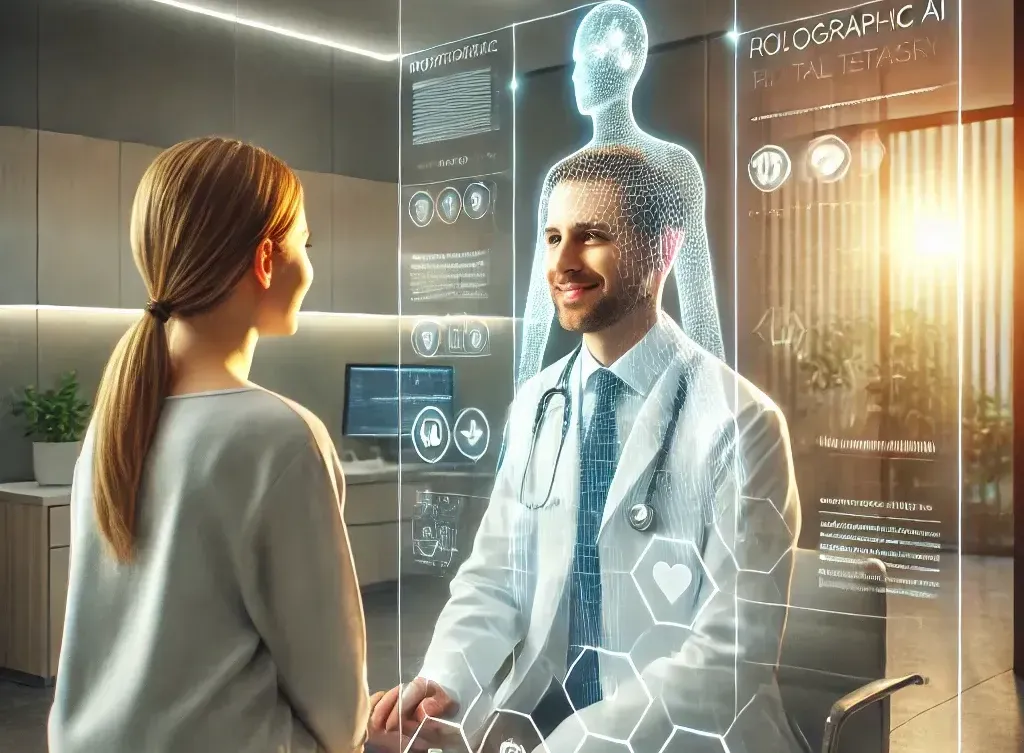
Now imagine Linda walking into the clinic. AI isn't just in the room - It's build around human needs: spotting patters, catching early, warning signals, reducing cognitive lead, and freeing clinicians to focus on patients.
The doctor glances at an alert: diagnosis, treatment, and follow-up happen in real time. Language barrier? Gone. Real-time translation works naturally. No interpreters. No miscommunication. Just understanding.
AI continues after Linda leaves. Wearables track sleep, heart rate, activity. Labs, prescriptions, follow-ups - all coordinated seamlessly. Care becomes proactive, continuous, smart, and human-focused.
Subtle symptom changes? Not missed. Early warning signs? Flagged immediately. Doctors? Freed from paperwork, guesswork, and frantic multitasking. They can finally look patients in the eye instead of the screen. This isn’t science fiction.
It’s AI amplifying human care, designed around human needs, making medicine faster, smarter, and actually human.
Early Winners: AI Doing the Heavy Lifting
Some hospitals are already showing what's possible when AI is designed for humans:
The Permanente Medical Group (Kaiser Permanente)
- Ambient AI scribes quietly listen to doctor-patient conversations and draft notes in real time.
- Rolled out to 7,260 physicians, used in 2.5 million patient encounters.
- Saved nearly 16,000 hours of documentation - roughly 8 years of typing gone.
- Patients noticed: 47% said their doctor actually looked at them instead of staring at a screen.
Mount Sinai Health System
- Ran GPT-4 on over 864,000 ER visits to predict which patients would need admission.
- Accuracy? ~83%. Faster triage, smarter bed allocation, shorter waits,
- Doctors get an extra brain without extra stress; patients get care sooner.
These early wins aren't about replacing humans - they're about designing AI to serve humans: reducing cognitive load, improving communication, and giving doctors time to do what only humans can do: empathize, observe, and act.
Gaps Turning Into Opportunities: The Next Frontier for AI in Healthcare
Even with early AI successes, critical gaps remain. Places where technology hasn’t fully arrived but has the potential to transform care when designed around human needs. These gaps aren’t just challenges. They’re opportunities to design AI that truly serves patients and clinicians.
Too many still think AI in healthcare is about replacing doctors. It’s not. AI amplifies human care. When thoughtfully designed, AI can give clinicians bandwidth to focus on patients, catch subtle issues earlier, and actually make eye contact instead of staring at screens.
The real frontier lies in untapped opportunities where AI, guided by human-centered design, can enhance judgement, reduce friction, and restore trust in every interaction.
Some of the highest-impact opportunities include:
- Real-time early detection. Continuous monitoring of vitals, lab trends, and behavioral cues - flagging red flags before they become emergencies. Alerts are smart, context-aware, and actionable.
- End-to-end care orchestration. AI can coordinate multiple providers, labs, specialists, and pharmacies automatically, closing gaps in care and reducing missed follow-ups.
- Dynamic, personalized patient guidance. Tailored nudges for rest, hydration, medication or follow-up, adapting in real-time to a patients's recover, lifestyle, and home environment.
- Seamless language and cultural adaptation. Instant, context-aware, real-time translation for every interaction, even complex medical conversations, so patients are truly understood.
- Behavioral and mental health insights. Detect stress, anxiety, or cognitive red flags early and alert clinicians before problems escalate.
These aren't just technological possibilities. They're design imperatives. AI only matters when it's shaped around human behavior, workflow, and experience.
The Hard Part Isn’t the Algorithm - It’s the Design
The toughest problems in healthcare AI aren’t math, they’re human.
How do you earn a doctor’s trust without giving them another reason to stare blankly at a screen? How do you make AI feel empathetic to patients who are scared, exhausted, or just plain confused like Linda, struggling to explain her symptoms through a malfunctioning interpreter machine?
How do you drop autonomous systems into chaotic hospital workflows without creating more chaos? And how do you rebuild trust with clinicians burned by clunky software that promised miracles but delivered headaches?
These are human-centered design challenges, and they matter more than any algorithm. A brilliant algorithm is worthless if no one can or wants to use it.
In healthcare, empathy, transparency, and usefulness aren’t optional. They’re survival skills.
Success doesn't come from the fanciest AI. It comes from AI that works for humans:
- Slips seamlessly into a nurse’s 12-hour shift
- Respects a doctor’s cognitive load while juggling thousands of decisions
- Guiding patients like Linda without adding confusion or stress.
This is the AI that earns trust. The AI that delivers care that actually matters.
Let’s Build What’s Next
The opportunity is massive.
We’re standing at a turning point where AI and human-centered design can work hand in hand to make healthcare not just smarter, but profoundly more human.
It’s time to build systems that heal trust as much as they heal patients, AI that feels less like technology and more like care.
If we design for clarity, empathy, and usefulness, we can reimagine what healthcare looks and feels like for everyone involved, turning complexity into confidence, and care into experience.
The next era of healthcare starts here - where AI and design work together to put humans first.
Comments ()